
If your campaign reports feel messy, duplicated, or hard to trust, poor UTM naming is often the reason. One person uses facebook, another uses Facebook, someone else enters fb, and suddenly your reports are fragmented.
Strong UTM naming conventions help marketing teams stay organized, improve attribution accuracy, and make reporting easier across platforms like Google Analytics 4, dashboards, and BI tools.
This guide covers practical UTM naming best practices you can use immediately.
What Are UTM Naming Conventions?
UTM naming conventions are the rules your team follows when creating campaign parameters such as:
utm_sourceutm_mediumutm_campaignutm_termutm_content
Instead of everyone naming links differently, conventions create one clean system.
Example:
Bad:
- facebook_ads
- fb
Better:
Why UTM Naming Best Practices Matter
Without standards, reports become difficult to analyze.
Common problems include:
- Duplicate traffic sources
- Inconsistent campaign names
- Hard-to-filter reports
- Broken attribution
- Time wasted cleaning data
- Confusing dashboards
Good naming rules create reliable reporting from day one.
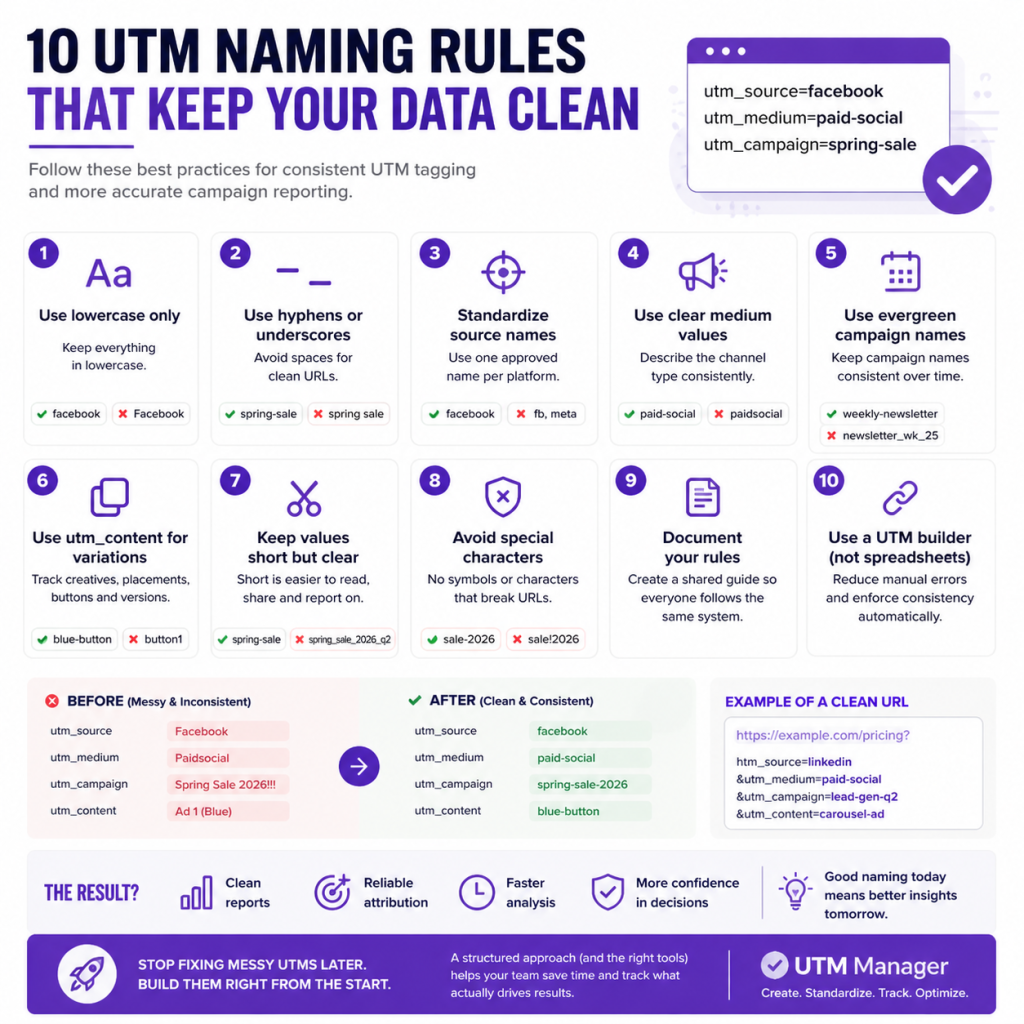
1. Keep All UTM Values Lowercase
Always use lowercase values.
Use:
facebookemailspring_sale
Avoid:
- Spring_Sale
Many analytics tools treat uppercase and lowercase values as different entries.
Example:
Email and email may appear separately in reports.
2. Use Hyphens or Underscores for Spaces
Spaces create messy URLs and can lead to formatting issues.
Use:
spring-saleweekly_newsletter
Avoid:
spring sale
Pick one style and use it consistently.
Most teams prefer hyphens because they are easier to read.
3. Use Consistent Source Names
Decide one approved source name for each platform.
Examples:
googlefacebooklinkedininstagramyoutube
Avoid mixing:
- fb
- meta
- facebook-paid
Unless your organization has a defined system, keep source names simple.
4. Standardize Medium Values
Use medium values to describe channel type.
Examples:
cpcpaid-socialemailorganic-socialdisplayaffiliate
Avoid random naming like:
- paidsocial
- p_social
- ads1
5. Use Evergreen Campaign Names When Possible
If campaigns repeat regularly, use consistent campaign naming.
Examples:
weekly-newsletterblack-fridayproduct-launchwebinar-series
Then use utm_content for variation.
Example:
utm_campaign=weekly-newsletterutm_content=header-banner
This keeps long-term reporting cleaner.
6. Use UTM Content for Creative Variations
Use utm_content to track versions of ads, buttons, placements, or creatives.
Examples:
blue-buttonhero-imagetext-link-footer
This is useful for A/B testing and ad creative analysis.
7. Keep Values Short but Clear
Shorter values create cleaner links and easier management.
Good:
emailspring-saleretargeting
Too long:
paid_social_facebook_mobile_campaign_q2_version3
Be concise without losing meaning.
8. Avoid Special Characters
Avoid symbols that can break URLs or make reporting messy.
Avoid:
summer&salepromo!launch(2026)
Use:
summer-salepromolaunch-2026
9. Document Your Rules
Create a shared internal guide so everyone follows the same system.
Include:
- Approved sources
- Approved mediums
- Campaign naming structure
- Abbreviation rules
- Required parameters
Even a one-page guide helps.
10. Use a UTM Builder Instead of Manual Entry
Manual typing creates mistakes.
A structured builder helps enforce:
- lowercase values
- approved dropdowns
- required fields
- duplicate prevention
- faster creation
That is exactly why UTM Manager was built—to help teams create clean, consistent tracking links without spreadsheet chaos.
Example of a Clean UTM Structure
https://example.com/pricing?
utm_source=linkedin
&utm_medium=paid-social
&utm_campaign=lead-gen-q2
&utm_content=carousel-ad
Common Mistakes to Avoid
- Mixing uppercase and lowercase
- Using multiple names for same platform
- Long unreadable campaign names
- No team standards
- Missing medium values
- Reusing random past names
Final Thoughts
UTM naming conventions may seem small, but they have a huge impact on reporting quality. Clean naming means cleaner attribution, faster insights, and more confidence in marketing decisions.
If your team creates campaign links regularly, set naming rules now before data becomes messy.
Want an Easier Way to Manage UTM Naming?
UTM Manager helps teams create standardized UTM links with rules, templates, governance, and faster workflows—so every link stays clean and consistent.
Still Building UTM Links in Spreadsheets?
Create clean campaign URLs faster, save templates, and standardize naming across your team.